
 33.7490° N 84.3880° W · ATLANTA & BUCKHEAD, GA
Home theater installation in Atlanta
Many Buckhead and Tuxedo Park homes are stately Georgian or brick traditionals, and the northern suburbs see a steady stream of new custom builds in Milton, Alpharetta and Johns Creek. A theater room in either calls for its own plan: careful wiring in a finished home, or pre-wiring at the framing stage in a new one. We introduce you to vetted, licensed installers, and stay with you until you're confident.
- Licensed Georgia contractors only, checked on the state lookup
- Savant, Control4, Crestron and Lutron specialists
- Building new? We bring the installer in at framing
Licensed only
Every installer's state license, checked on the state's own lookup before any introduction.
Independent
We don't install or sell equipment, so there is no brand to push.
Never sold
Your details go only to the installers you choose to meet. Never to a list.
Free to you
Installers pay us only when a project goes ahead. You never pay us anything.
A room engineered for movies at home
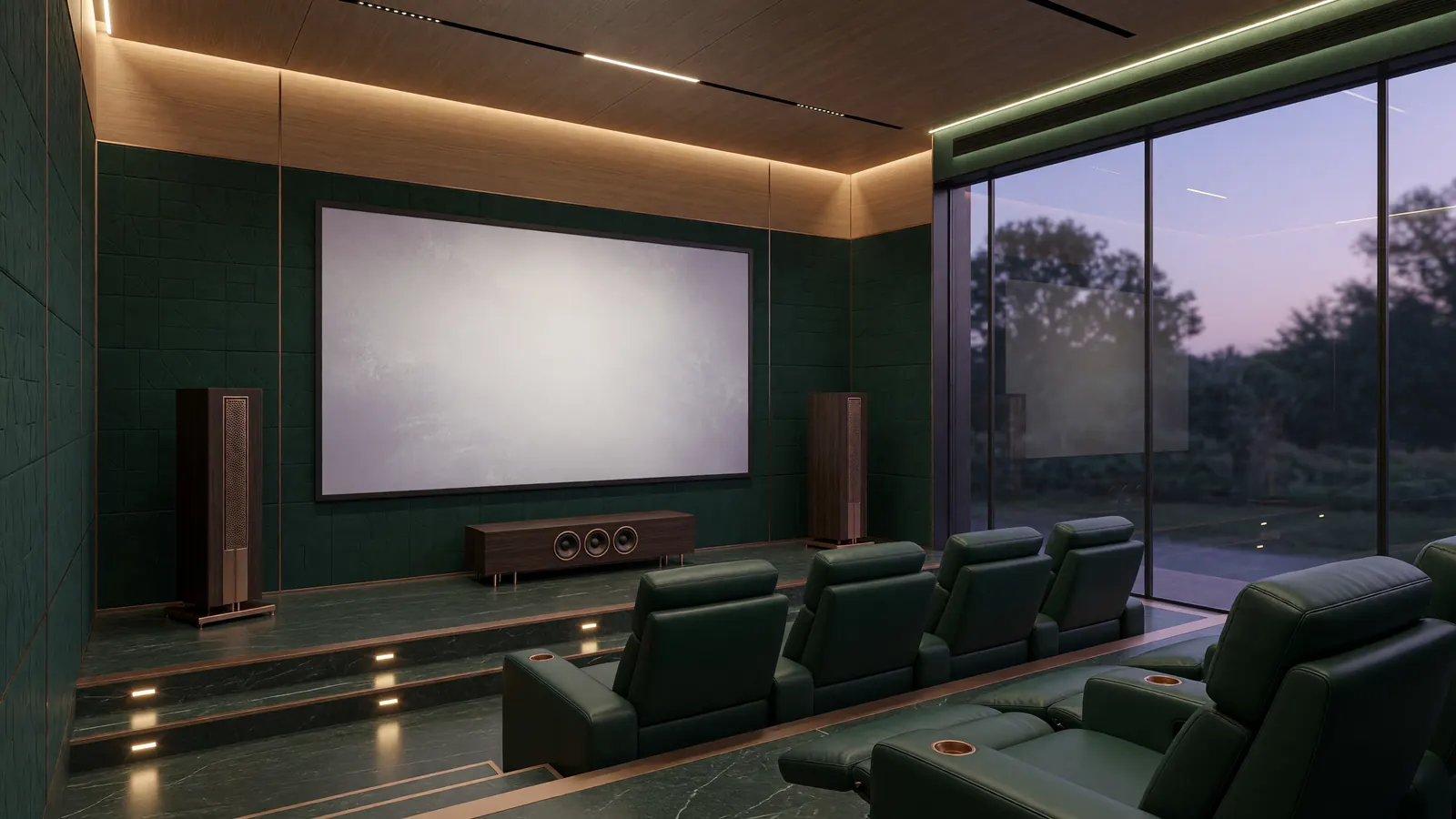
A home theater is a dedicated room built and tuned specifically for movies, centered on a large screen or projector, a surround sound system, and seating arranged for sightlines rather than furniture. Unlike a television in the family room, everything in the space, screen size, seating rows and wall treatment, is chosen to work together, so dialogue stays clear, bass doesn't rattle the walls next door, and the picture holds up with the lights on or off.
Many owners choose a media room rather than a dedicated theater. It's a flexible living space with a large television or short-throw projector, motorized shading for daytime viewing, and a standard surround system, without the full acoustic treatment or tiered seating a dedicated room calls for. A true dedicated theater goes further, with acoustic treatment or soundproofing, complete light control, a screen 100 inches or larger, tiered or stadium-style seating, and an immersive surround format such as Dolby Atmos.
What it usually includes
- A large-format screen or projector, sized to the room
- A surround sound system, often with Dolby Atmos ceiling speakers
- Acoustic treatment or soundproofing so sound stays in the room
- Blackout shading or full light control
- Tiered, stadium-style or reclining seating
- A dedicated equipment rack and low-voltage wiring
- Professional calibration once everything is installed
What it costs
Fixr's 2026 cost data puts a home theater setup at $10,000 to $50,000 nationally, with $25,000 the most common project cost and a dedicated room addition running $20,000 to $70,000. One luxury installer's guide sorts estate-level projects into tiers, from a $25,000-$60,000 media room up to a $200,000-$500,000+ reference-grade cinema; see our home theater cost guide for a full breakdown.
The Atlanta cost guide →What an Atlanta theater room has to plan for
Fitting a cinema into a traditional home
Many Buckhead, Tuxedo Park and Chastain Park homes are stately brick or Georgian traditionals built long before anyone planned for a home theater. Running wiring for a dedicated room through finished plaster and brick walls takes more careful routing than an open frame, so it helps to use an installer who works with older construction and knows where the walls can and can't be opened.
Wiring it in before drywall goes up
If you're building new in Milton, Alpharetta or Johns Creek, bring the installer in at the framing stage so theater wiring runs through open walls instead of being fished in later, which usually means less mess, less repair work and a cleaner finished room once the trim goes back on. See the pre-wiring guide.
Keeping the picture on through a storm
Summer storms can bring down trees and cut power, and Atlanta has lived through serious ice storms, including 2014's "Snowmageddon." Backup power for the rack keeps a storm from damaging equipment or cutting a movie short, and it protects the same gear on any ordinary evening the power flickers, storm season or not.
Check any installer's license yourself
In Georgia, low-voltage contractors are licensed by the State Construction Industry Licensing Board. Check the installer's license on the Secretary of State's lookup. The four low-voltage classes are:
Common questions
Straight answers to what owners ask us most.
Can a home theater be added to an older Buckhead or Tuxedo Park home?
Yes, though wiring through finished plaster or brick walls takes more careful routing than new construction. An experienced installer can usually find a path without major repair work, using existing chases or closets to avoid opening up finished rooms.
When should I involve an installer if I'm building new in Milton or Alpharetta?
At the framing stage, before insulation and drywall go up, so theater wiring runs through open walls instead of being added later. See the pre-wiring guide for what to plan for and when.
What happens to theater equipment during a summer storm outage?
A good installer puts the rack on backup power and surge protection, which matters in a city where summer storms and even historic ice storms, like 2014's "Snowmageddon," can cut power.
How much does a home theater cost?
Fixr's 2026 data puts most home theater projects nationally at $10,000 to $50,000, with $25,000 the most common cost. A dedicated room addition, construction included, typically runs $20,000 to $70,000. Estate-level private cinemas with full acoustic engineering and tiered seating can run $200,000 or more. See our home theater cost guide for details by size.
How long does a home theater take to install?
For a dedicated theater, one luxury installer's guide estimates 4 to 8 weeks for design and planning, then 8 to 16 weeks for construction and installation, depending on scope. A simpler media room, without construction, moves faster. See our installation timeline guide for what happens at each stage.
Two minutes now. The right installer, sooner.
Tell us about the home. We'll confirm the details with you, then book your first consultation with the installer who fits best.