
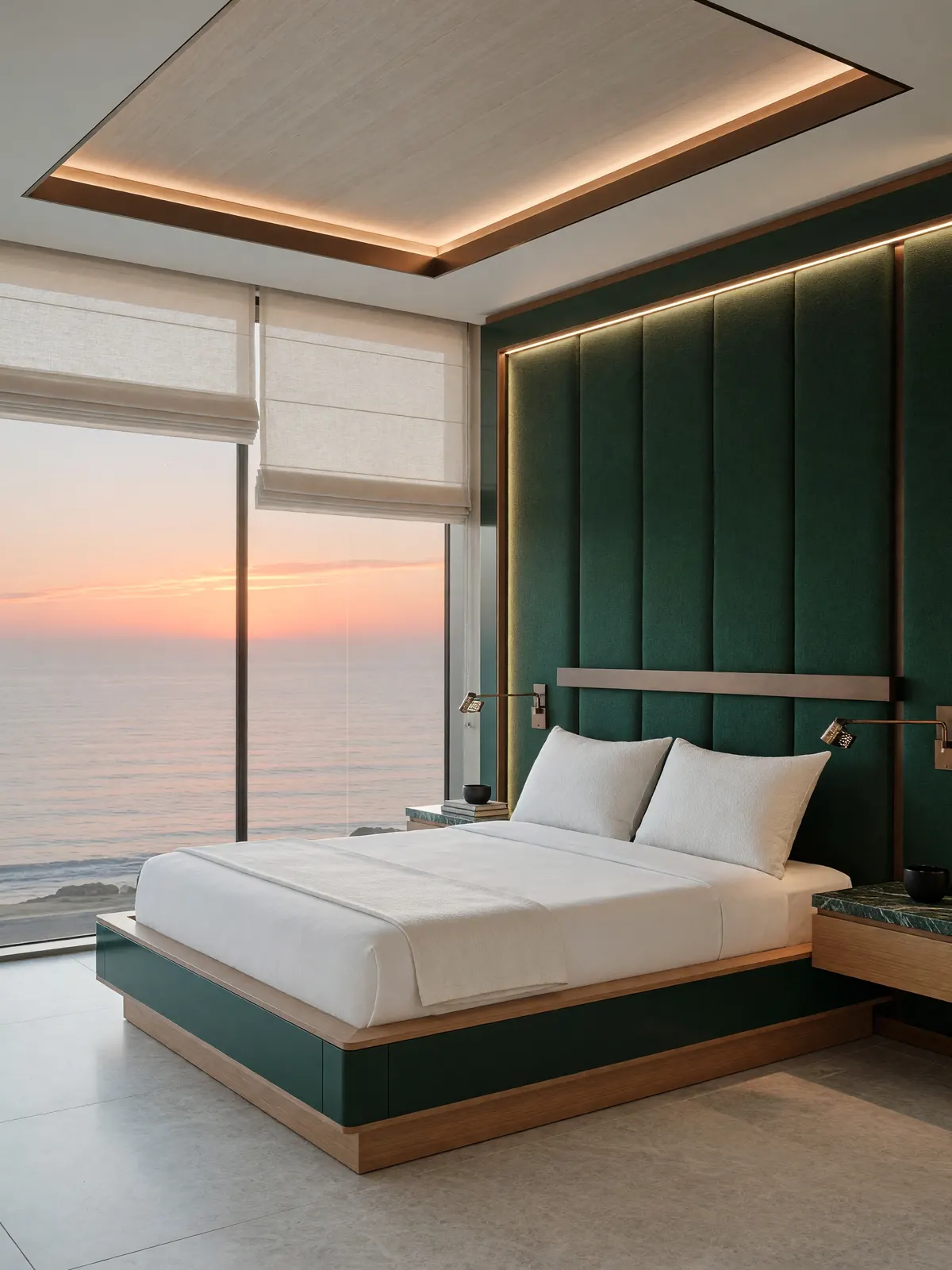
 33.7490° N 84.3880° W · ATLANTA & BUCKHEAD, GA
Motorized shades in Atlanta
Traditional Georgian and brick homes in Buckhead and Tuxedo Park call for shades that disappear into the window trim, and large wooded lots mean the sun hits every room differently. Motorized shades handle both, closing on a schedule that fits the light each room actually gets. We introduce you to vetted, licensed installers who understand traditional Atlanta architecture, and we stay with you until you're confident.
- Licensed Georgia contractors only, checked on the state lookup
- Savant, Control4, Crestron and Lutron specialists
- Building new? We bring the installer in at framing
Licensed only
Every installer's state license, checked on the state's own lookup before any introduction.
Independent
We don't install or sell equipment, so there is no brand to push.
Never sold
Your details go only to the installers you choose to meet. Never to a list.
Free to you
Installers pay us only when a project goes ahead. You never pay us anything.
Shades that open and close on their own
Motorized shades raise, lower or tilt on their own, controlled by a keypad, an app, a remote, or a schedule tied to the sun. On a large home they typically connect into the same whole-home control system as lighting and audio, so a single 'morning' or 'movie' scene can adjust shades throughout the house at once. Fabric, opacity and mounting style are chosen room by room, so a media room might get a blackout fabric while a great room keeps a sheer that filters glare without blocking the view.
Shades run on either a rechargeable battery pack or a hardwired motor tied into your electrical system. Hardwired systems cost roughly 20 to 30 percent more to install but never need a battery changed or recharged, which matters on a hard-to-reach window. Battery-powered systems, such as Hunter Douglas's PowerView line, are often a better fit for retrofitting an existing home. Price is driven mainly by the number and size of windows, the fabric you choose, the motor type, and how deeply the shades tie into a broader control system.
What it usually includes
- Motorized roller, Roman, honeycomb or drapery-track shades
- A choice of fabric, from sheer to full blackout
- Battery-powered or hardwired motors
- Sun, UV or heat sensors tied to automatic scenes
- Keypad, remote, app or voice control
- Integration with a whole-home lighting or automation system
- Programming of daily or seasonal schedules
What it costs
One luxury installer's published guide prices a single motorized roller shade, installed, at $800 to $2,500; a full-home installation across 30 to 60 or more windows commonly runs $40,000 to $120,000 or more, and a 5,000-square-foot home typically lands between $25,000 and $100,000-plus. See our motorized shades cost guide for a room-by-room estimate.
The Atlanta cost guide →What Atlanta's homes and lots mean for shades
Keeping a traditional look
In Buckhead, Tuxedo Park and Chastain Park's Georgian and brick traditional homes, shades are usually chosen to disappear into the window trim, with concealed motors and no visible cords, so the room still reads as classic rather than automated, even with a full house of motorized windows working quietly in the background.
Different light on every side of a wooded lot
Large, wooded lots common in the Atlanta suburbs mean some rooms face open lawn and full sun while others sit under tree cover for most of the day. Scheduling shades room by room, not on one blanket setting, matches the light each room actually gets rather than treating the whole house the same.
Planned in before the walls close
New builds in Milton, Alpharetta and Johns Creek can have shade wiring run at the framing stage rather than added after the fact, which keeps the finished window trim clean with no surface-mounted wiring to hide once the walls are painted and the trim is up. See the pre-wiring guide.
Check any installer's license yourself
In Georgia, low-voltage contractors are licensed by the State Construction Industry Licensing Board. Check the installer's license on the Secretary of State's lookup. The four low-voltage classes are:
Common questions
Straight answers to what owners ask us most.
Can motorized shades look right in a traditional Buckhead home?
Yes. Installers commonly conceal the motor and hardware inside the window trim, so the shade reads as a normal window treatment rather than a visible piece of technology, which matters in a house built around classic architectural details.
Do all the shades in a large wooded-lot home need to run on the same schedule?
No. Rooms facing open lawn and full sun can run a different schedule than rooms shaded by trees, since the sun exposure often isn't the same on every side of the house.
What do motorized shades typically cost?
It depends on the number and size of windows, the fabric and whether the motors are hardwired or battery-powered. See the motorized shades cost guide for typical ranges and what drives the price up or down.
Should I choose battery-powered or hardwired motorized shades?
Hardwired shades cost roughly 20 to 30 percent more to install but never need a battery changed, which is worth it for hard-to-reach or frequently-used windows. Battery-powered shades, such as Hunter Douglas's PowerView line, install with less disruption and are often the better choice when retrofitting a home that's already finished, according to one luxury installer's guide.
How much do motorized shades cost for a whole house?
According to one luxury installer's pricing guide, a focused installation covering 10 to 15 windows typically runs $15,000 to $35,000, while a whole-home installation across 30 to 60 or more windows runs $40,000 to $120,000 or more. Price depends mainly on window count, fabric choice, and how deeply the shades integrate with your other systems.
Two minutes now. The right installer, sooner.
Tell us about the home. We'll confirm the details with you, then book your first consultation with the installer who fits best.