
 33.4942° N 111.9261° W · SCOTTSDALE & PARADISE VALLEY, AZ
Home theater installation in Scottsdale
Scottsdale's desert-contemporary homes are built around walls of glass, and Phoenix averages 111 days a year at 100°F or hotter, NOAA's 1991–2020 climate normals show. A theater room has to solve both problems: true blackout despite the glass, and equipment that survives the heat. We introduce you to vetted, licensed installers who plan for the light and the heat, and we stay with you until you're confident.
- Licensed Arizona contractors only, checked on the state lookup
- Savant, Control4, Crestron and Lutron specialists
- Only here for the winter? We start by phone or video
Licensed only
Every installer's state license, checked on the state's own lookup before any introduction.
Independent
We don't install or sell equipment, so there is no brand to push.
Never sold
Your details go only to the installers you choose to meet. Never to a list.
Free to you
Installers pay us only when a project goes ahead. You never pay us anything.
A room engineered for movies at home
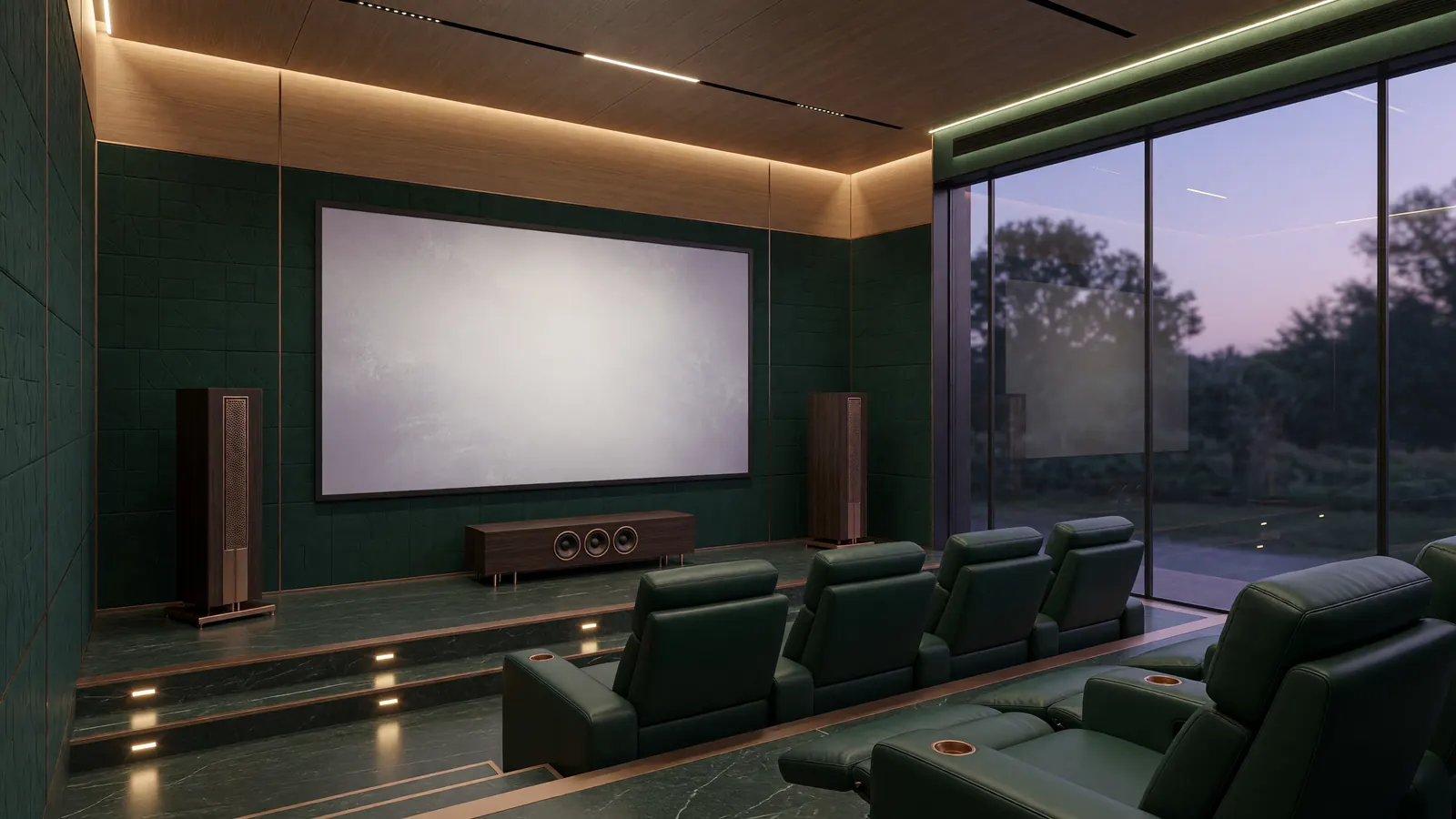
A home theater is a dedicated room built and tuned specifically for movies, centered on a large screen or projector, a surround sound system, and seating arranged for sightlines rather than furniture. Unlike a television in the family room, everything in the space, screen size, seating rows and wall treatment, is chosen to work together, so dialogue stays clear, bass doesn't rattle the walls next door, and the picture holds up with the lights on or off.
Many owners choose a media room rather than a dedicated theater. It's a flexible living space with a large television or short-throw projector, motorized shading for daytime viewing, and a standard surround system, without the full acoustic treatment or tiered seating a dedicated room calls for. A true dedicated theater goes further, with acoustic treatment or soundproofing, complete light control, a screen 100 inches or larger, tiered or stadium-style seating, and an immersive surround format such as Dolby Atmos.
What it usually includes
- A large-format screen or projector, sized to the room
- A surround sound system, often with Dolby Atmos ceiling speakers
- Acoustic treatment or soundproofing so sound stays in the room
- Blackout shading or full light control
- Tiered, stadium-style or reclining seating
- A dedicated equipment rack and low-voltage wiring
- Professional calibration once everything is installed
What it costs
Fixr's 2026 cost data puts a home theater setup at $10,000 to $50,000 nationally, with $25,000 the most common project cost and a dedicated room addition running $20,000 to $70,000. One luxury installer's guide sorts estate-level projects into tiers, from a $25,000-$60,000 media room up to a $200,000-$500,000+ reference-grade cinema; see our home theater cost guide for a full breakdown.
The Scottsdale cost guide →What a Scottsdale theater room has to plan for
Blackout in a glass house
Desert-contemporary homes favor walls of west- and south-facing glass, which is beautiful for everyday living but works against a true blackout theater. Sealing a room from that much sun usually takes real wall and door work, not just heavy drapes, especially in homes built around long window walls in areas like DC Ranch, Silverleaf and Desert Mountain. An installer who has solved this before plans the room's walls and doors before ever touching the screen or the seating.
Cooling the equipment closet
Phoenix averages 111 days a year at 100°F or hotter (NOAA 1991–2020 climate normals), so an AV rack tucked into a small closet needs real ventilation or dedicated cooling, or the gear runs hot and fails early. Ask your installer how they plan to vent or cool the equipment room.
Protecting gear through monsoon season
Summer monsoon storms bring dust and power cuts across the Scottsdale area (National Weather Service), and a movie interrupted mid-scene is the least of it. A hard outage can also damage a projector or receiver that isn't protected, especially if it happens while the system is running. Putting the theater's rack on a backup and surge-protected circuit keeps the room ready whenever you want to use it, whether or not a storm rolled through that afternoon.
Check any installer's license yourself
In Arizona, contractors must be licensed by the Registrar of Contractors (ROC), which issues separate residential and commercial license classes. Before you hire:
Common questions
Straight answers to what owners ask us most.
Can a home theater work in a glass-walled desert home?
Yes. Installers build a light-tight room within the home using blackout shades, sealed doors and layered walls, even when the rest of the house is glass facing the sun. The result still functions as a true theater once the door closes.
Does Scottsdale's heat affect theater equipment?
It can. Phoenix averages 111 days a year at 100°F or hotter (NOAA 1991–2020 climate normals), so the equipment closet behind the screen needs proper airflow or cooling to keep gear from overheating.
What happens to the theater during a monsoon power cut?
A good installer puts the rack on backup power and surge protection, so a storm-related outage doesn't damage the equipment or interrupt whatever you're watching. That same circuit also protects the system on any ordinary day the power blinks, not only during monsoon season.
How much does a home theater cost?
Fixr's 2026 data puts most home theater projects nationally at $10,000 to $50,000, with $25,000 the most common cost. A dedicated room addition, construction included, typically runs $20,000 to $70,000. Estate-level private cinemas with full acoustic engineering and tiered seating can run $200,000 or more. See our home theater cost guide for details by size.
How long does a home theater take to install?
For a dedicated theater, one luxury installer's guide estimates 4 to 8 weeks for design and planning, then 8 to 16 weeks for construction and installation, depending on scope. A simpler media room, without construction, moves faster. See our installation timeline guide for what happens at each stage.
Two minutes now. The right installer, sooner.
Tell us about the home. We'll confirm the details with you, then book your first consultation with the installer who fits best.